ENTERPRISE PRODUCTS . PRODUCT DESIGN . UX DIRECTION
Making complex technology understandable
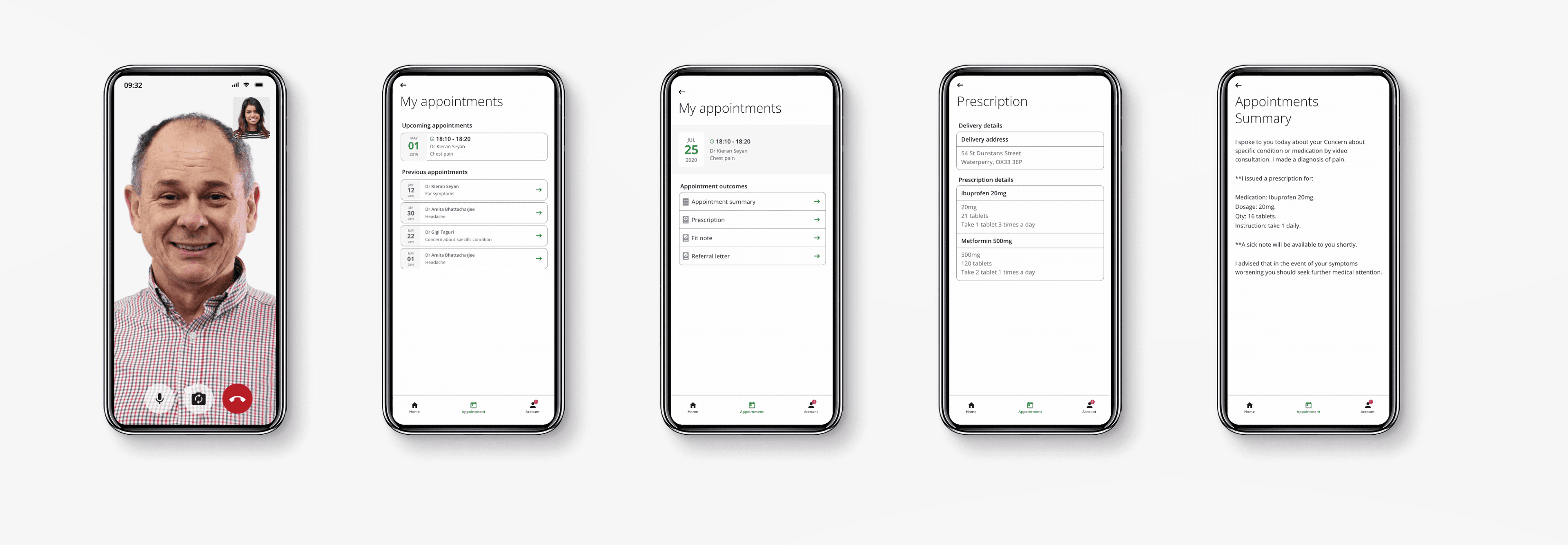
At The Hashgraph Group, I was responsible for UX across technical products including supply-chain traceability, digital identity, transactions and wallets.
My involvement depended on what each project needed. I designed some experiences directly, investigated unfamiliar concepts and shaped direction with other designers, and reviewed work across the portfolio. Traceability and identity show two different sides of that role.
- ROLE.
- Lead Product Designer
- FOCUS.
- Complex enterprise UX · Product design · Design direction
Understanding the products and connecting the work
When I joined, six designers worked within separate product and client teams, with little visibility into each other’s work. Projects often moved directly into UI before the problem or underlying model had been fully explored.
I introduced project discussions, one-to-ones and design reviews, bringing more investigation into the process and giving designers somewhere to work through difficult questions. I also coordinated assignments and design capacity.
Alongside this, I led a shared design system across the products.
Connecting a physical batch to its digital history
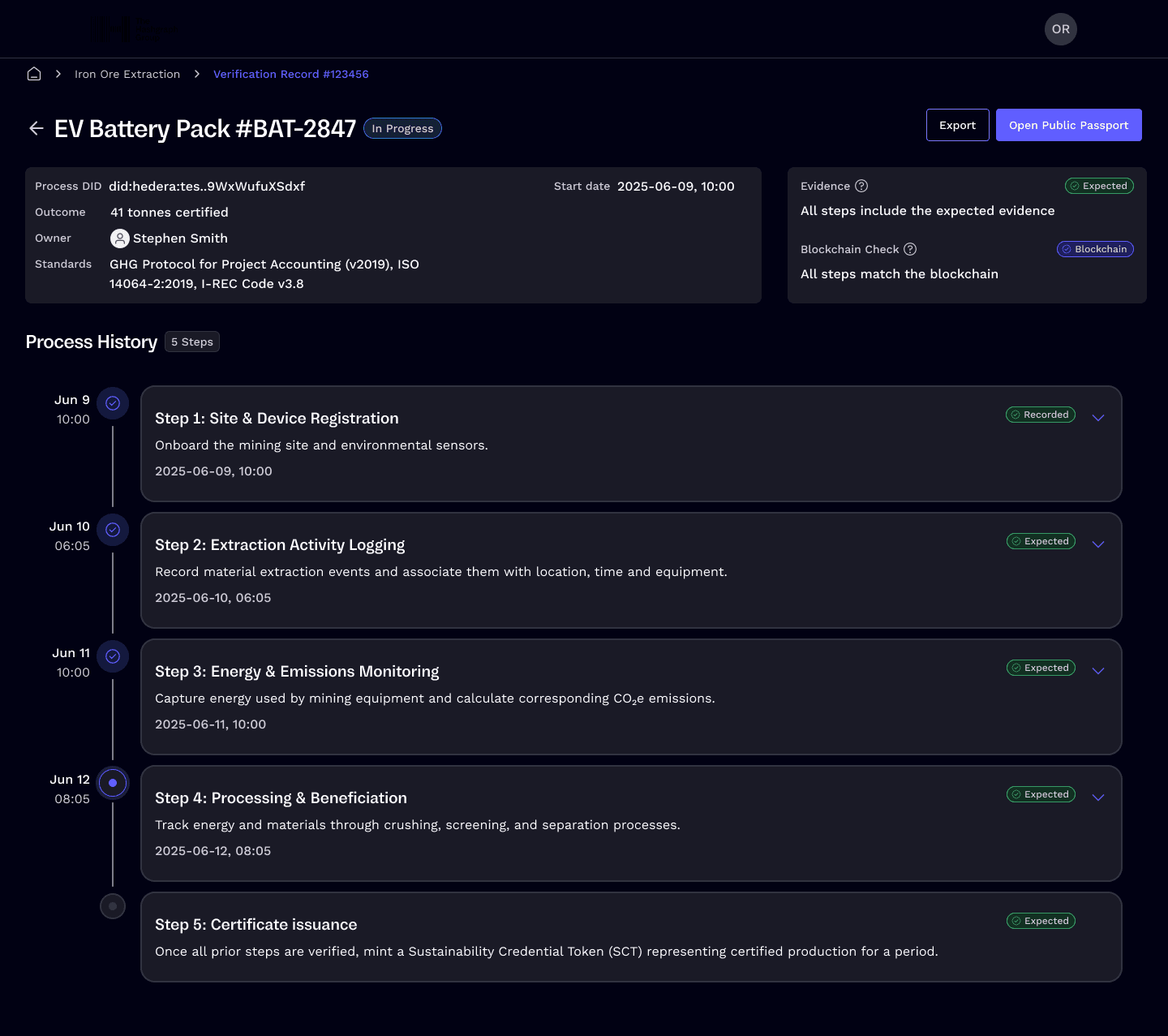
The traceability platform recorded a product’s journey through a supply chain. People and machines had their own identities, and their actions contributed to a history recorded on the blockchain.
The difficult part was representing what happened along the way. Materials could come from several sources, pass between organisations and be combined during production. People using the platform needed to understand those relationships without having to understand the architecture behind them.
For the cacao implementation, we also worked with a partner whose specialist scanner read a marker in the label’s pigment. This identified the batch, connecting a physical check with its digital record.
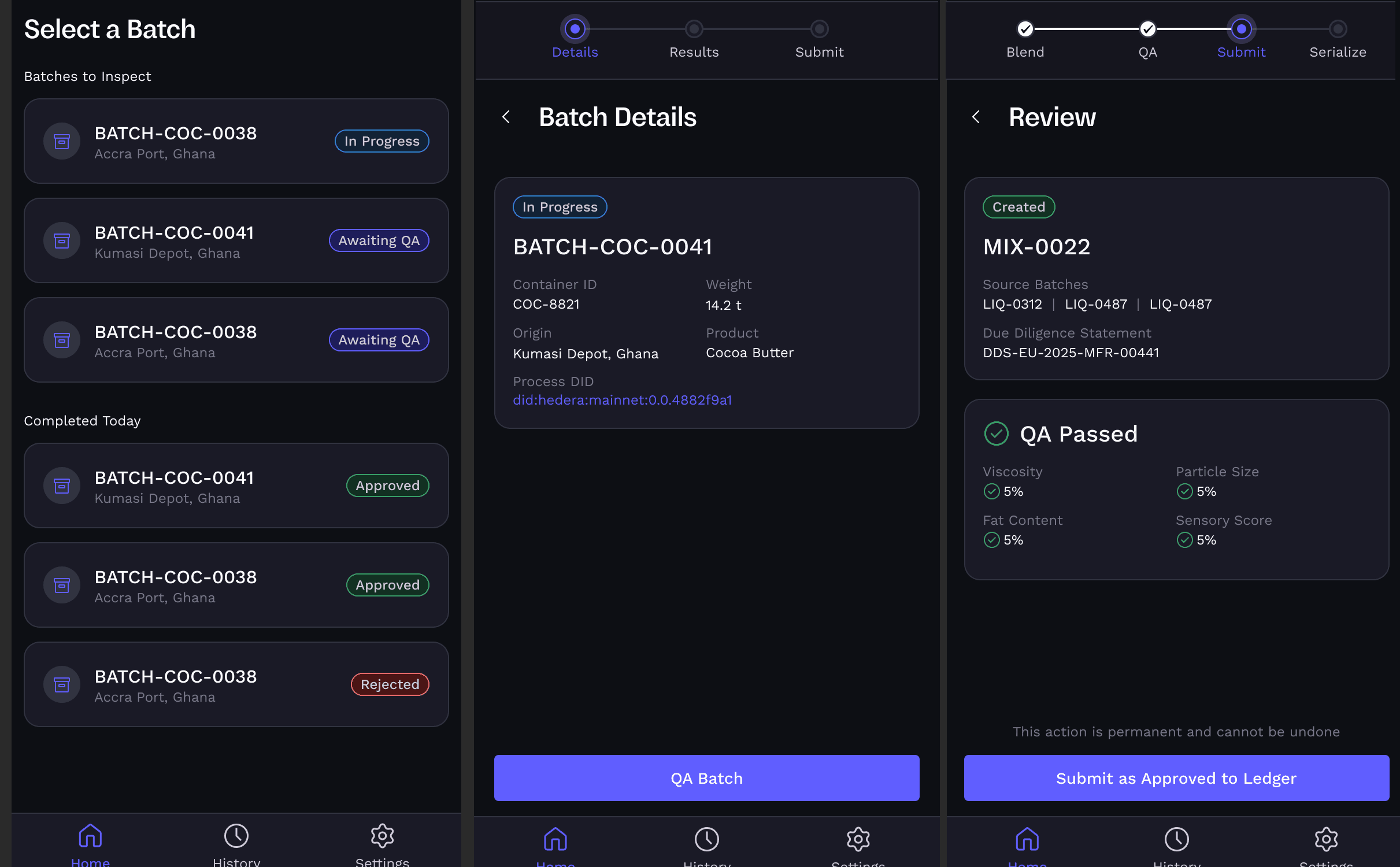
I designed the mobile scanning and verification app and parts of the admin console, working closely with the product owner and developers to understand the model.
Different participants needed different parts of the system
The mobile experience centred on scanning and interpreting the result: what had been scanned, whether it matched the expected product and what the result meant.
I put that immediate check first, with the product’s origin and wider history available afterwards. The platform’s breadth did not need to become the starting point for every interaction.
The admin console served a different task: managing the products, batches and labels behind those checks. Here, the relationships needed to be explicit enough to manage. Both interfaces had to describe the same system consistently while giving each participant the information relevant to their work.
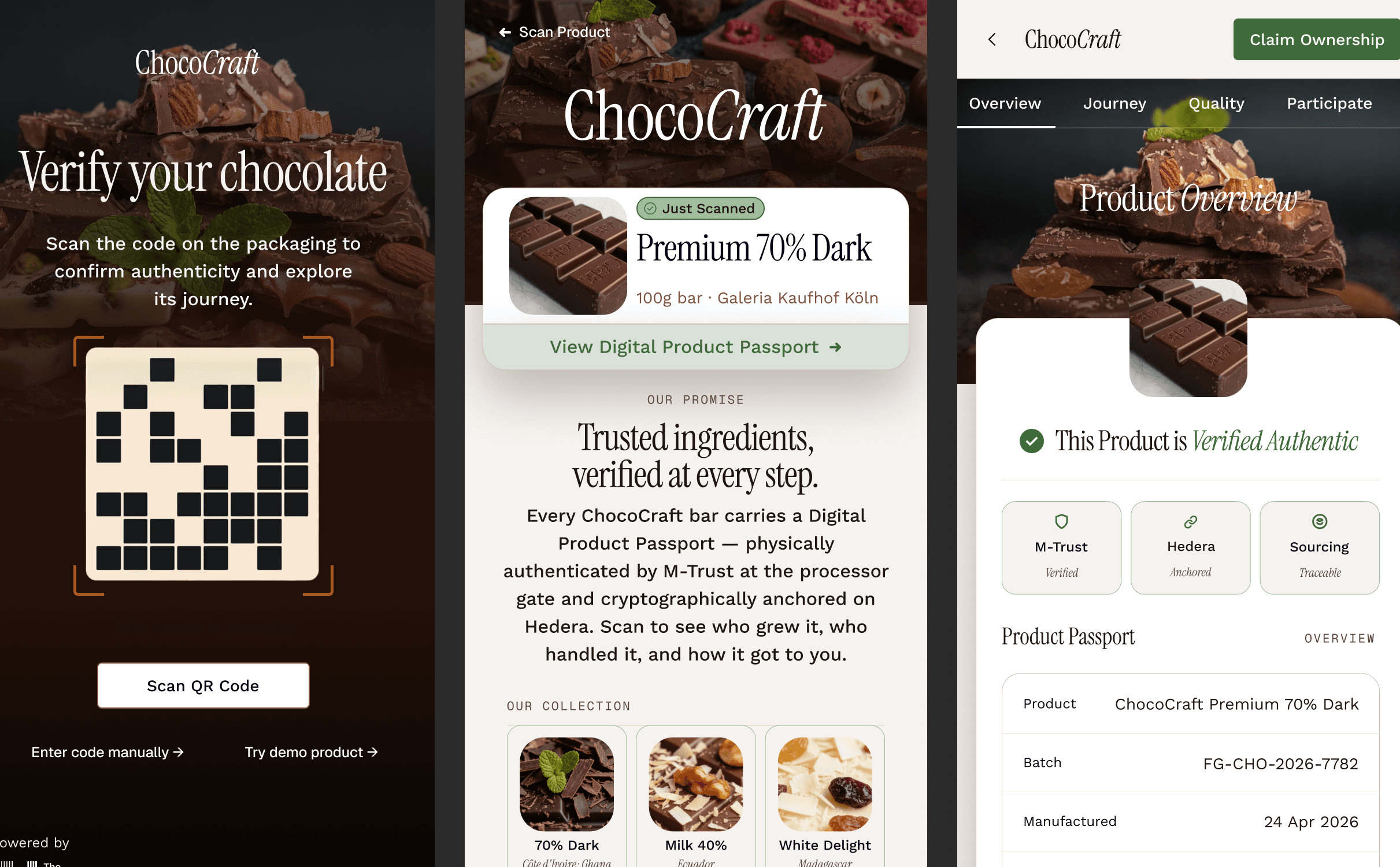
The same records reached customers through a digital product passport. People could see that a product was genuine, trace its materials back to where they came from and see the ESG goals behind it.
Familiar expectations met an unfamiliar model
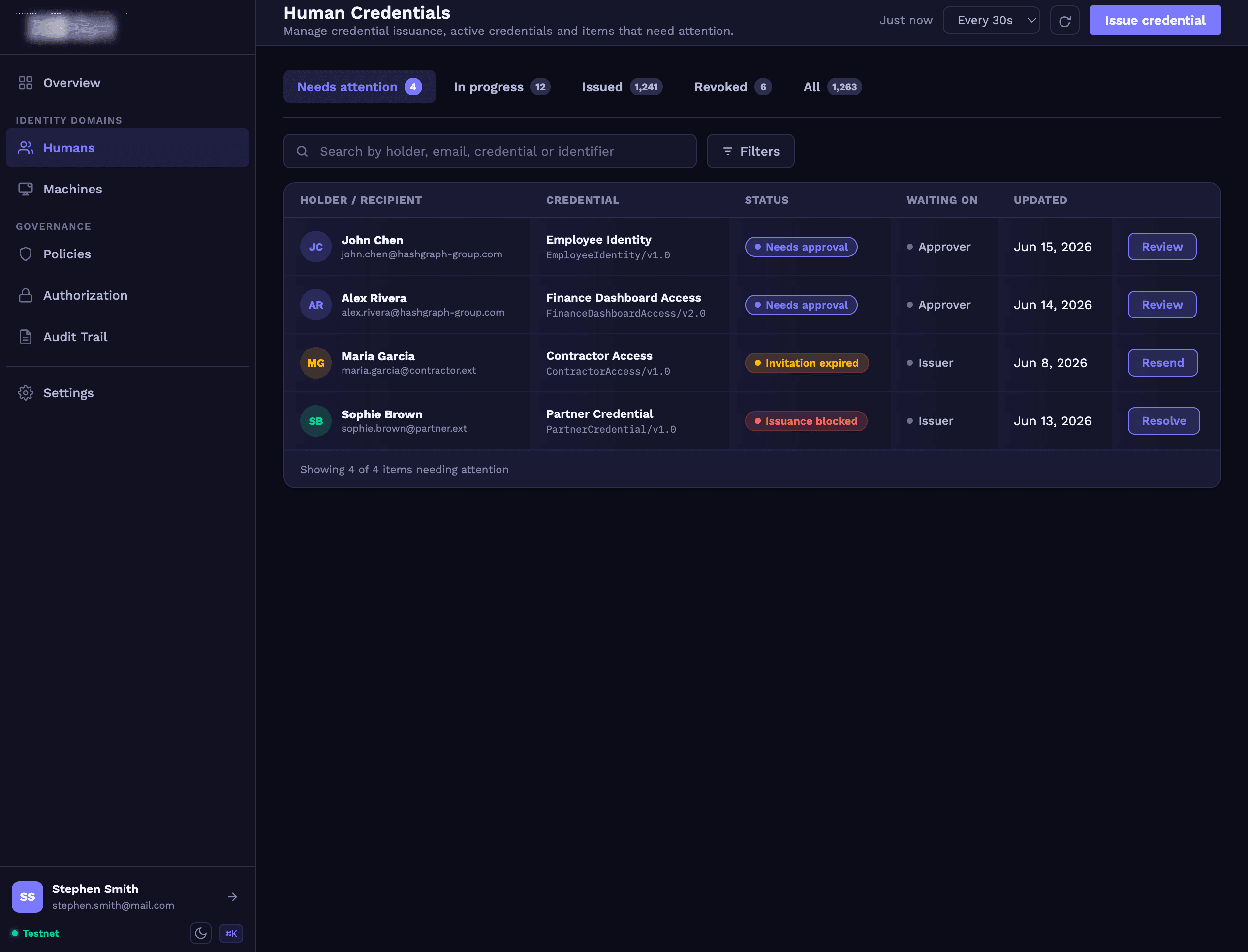
The identity platform already existed, but research highlighted how difficult it was to understand and set up. Credentials, permissions, different actors and Web3 terminology made even technical users struggle.
People familiar with conventional identity systems also brought expectations that did not always fit this product. Simpler language could help, but some behaviours needed explanation.
I investigated the identity concepts, mapped the product and developed a clearer concept for the experience. Another designer developed the day-to-day screens.
Deciding what to simplify and what to explain
I worked through the existing product with its original designer, screen by screen, separating complexity introduced by the interface from behaviour required by the underlying model.
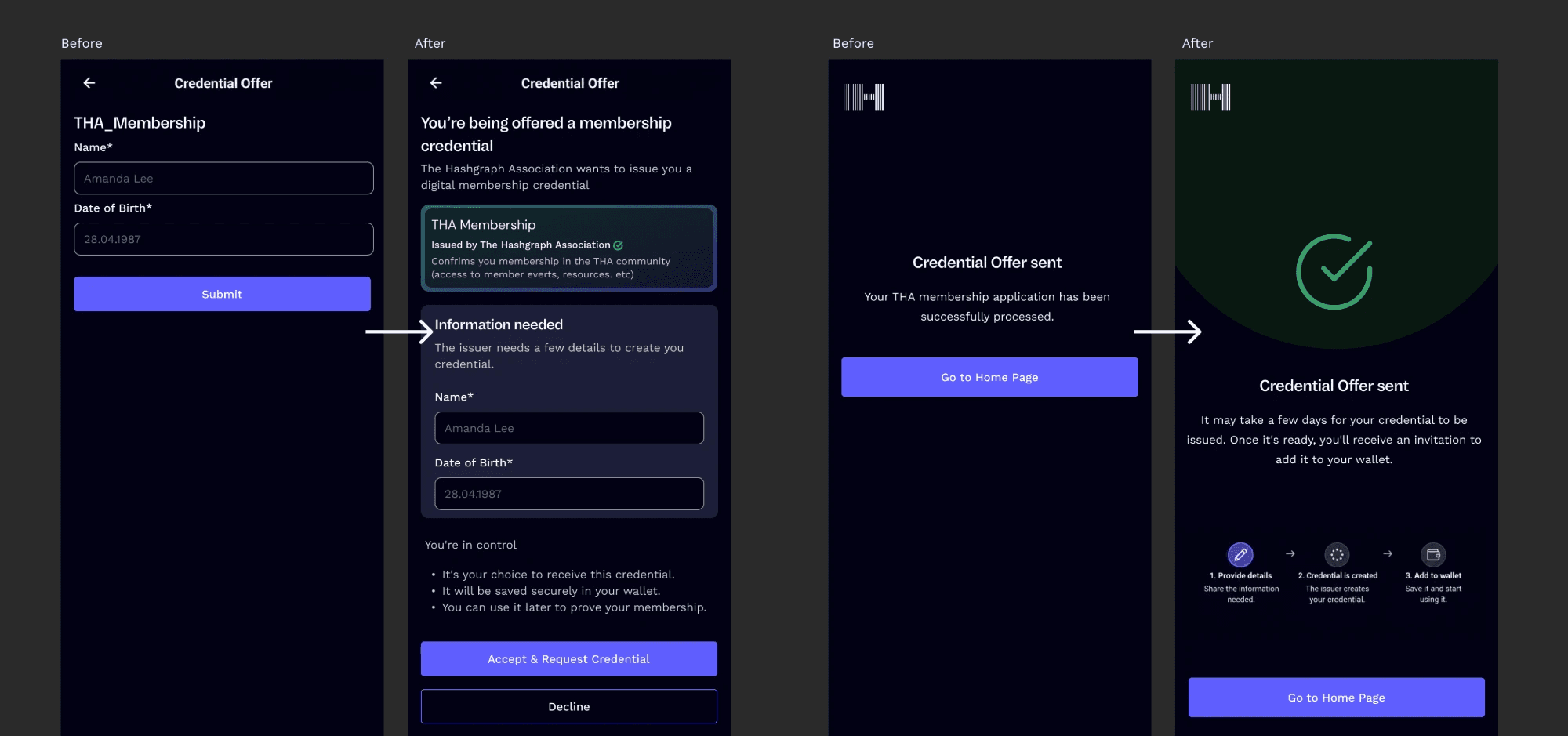
One example was receiving a digital credential. Users were presented with technical terminology, an unexplained form and a generic Submit button. There was little context about who was issuing the credential, why information was needed, or what would happen next.
I explored how to make the experience more understandable without changing the underlying process. The redesigned flow explained the offer, made the user’s choice explicit and introduced clearer feedback at each step.
The broader challenge was making the value of digital identity tangible. Instead of exposing the technology behind it, the experience needed to help people understand what they were receiving, what they could do with it, and where they had control.
Knowing where to get involved
I also oversaw work across transactions, wallets, carbon-credit tracking, access cards and customer care. Depending on the project, I investigated a concept, helped a designer resolve a flow, reviewed an approach or designed directly.
Shared reviews gave designers access to experience beyond their own projects and helped us carry decisions from one product into another.
Understanding where the complexity comes from
Traceability required me to connect physical materials, recorded events and verification. Identity required me to recognise where the system conflicted with people’s expectations.
Understanding those differences helped me decide what to bring forward, what could stay in the background and what needed explanation. Staying involved in hands-on design kept that judgment grounded in the same constraints the team was working through.